Coloring Of Alpines
Chamoisee (One "e" for bucks, two "e"s for does.)
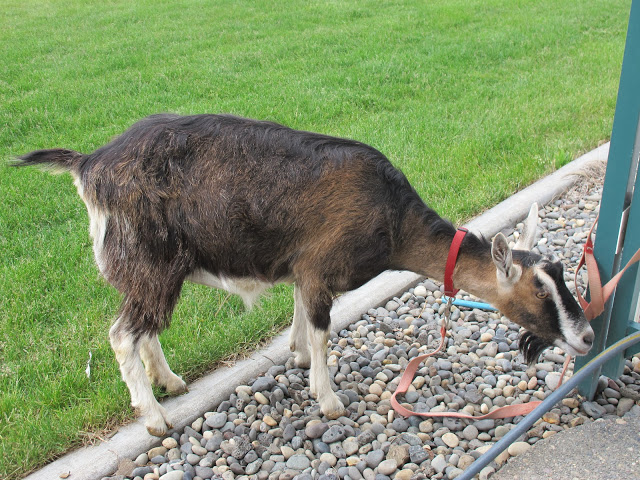
Dark Chamoisee.
|
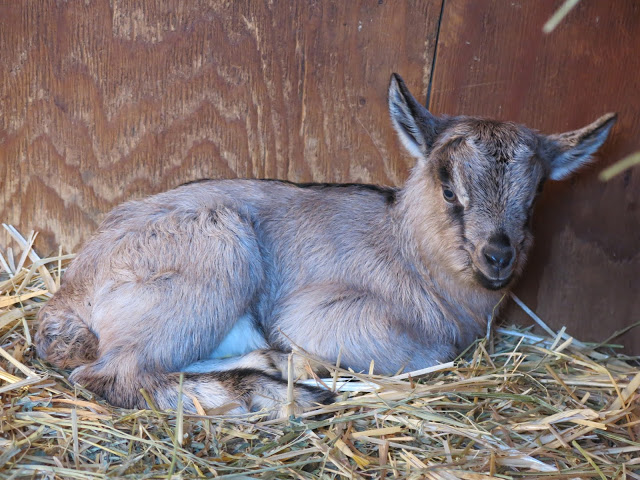
Light Chamoise
|
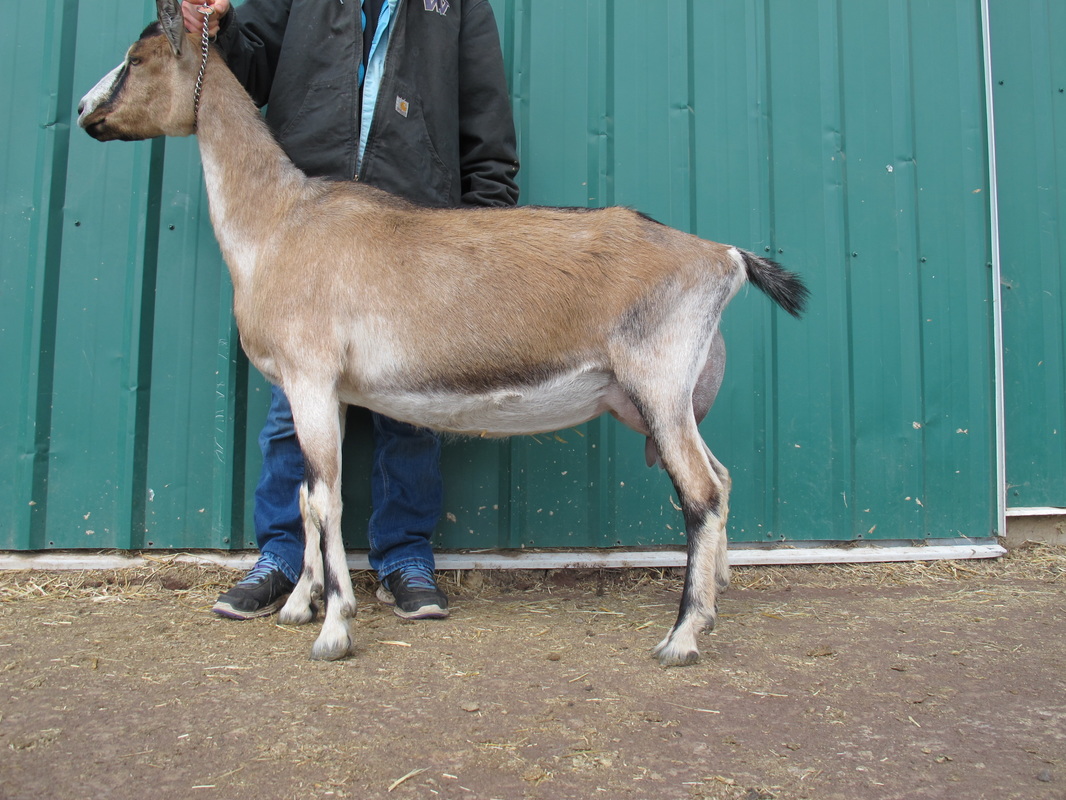
Medium shades I just call Chamoisee.
|
Two-Tone Chamoisee (Chamoisee with hindquarters darker than front.)
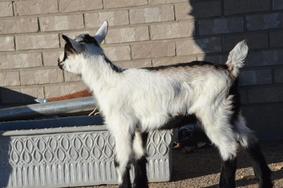
Notice the faint color along the black stripe on the lower portion on the back.
|
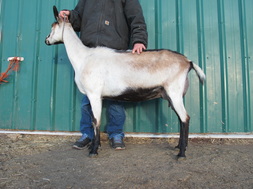
Doe on left as adult.
|
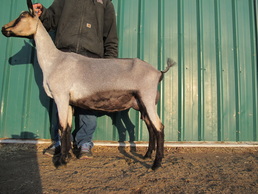
Variation, but still two-tone.
|
Black
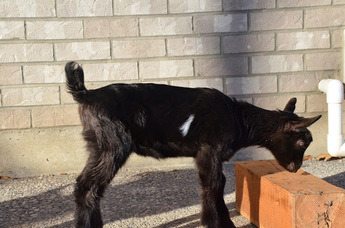
(Broken)
Cou Blanc (white on front, black on back)
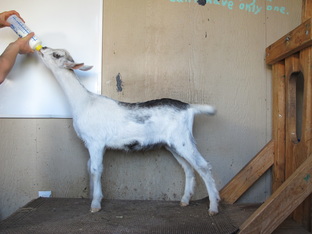
(Silver or frosted)
|
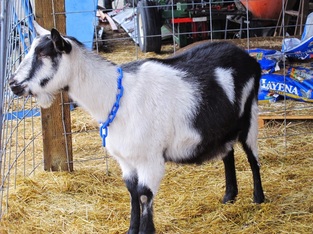
(Broken)
|
Cou Clair (off white, silver, or tan on front, black on back)
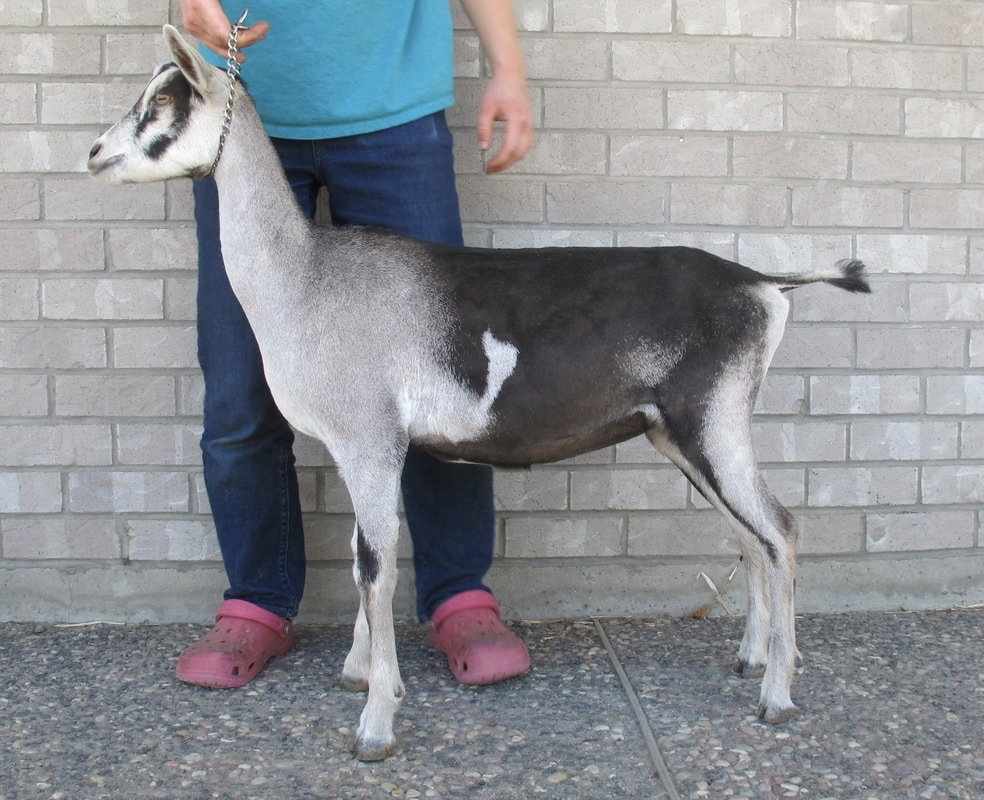
(Broken)
|
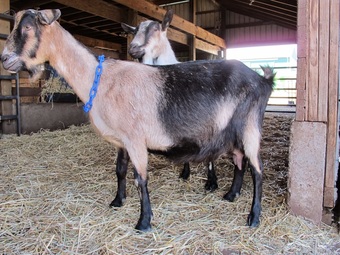
|
Cou Noir (black front quarters and white hindquarters)
Sundgau (black with white/light legs, under body, and facial stripes.)
Note-most Sundgau Alpines are genetically swiss marked because they don't have a white underbelly, but per the breed standard, they are registered as Sundgau.
Note-most Sundgau Alpines are genetically swiss marked because they don't have a white underbelly, but per the breed standard, they are registered as Sundgau.
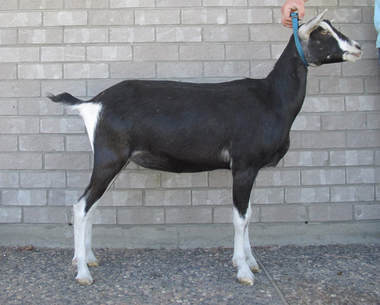
|
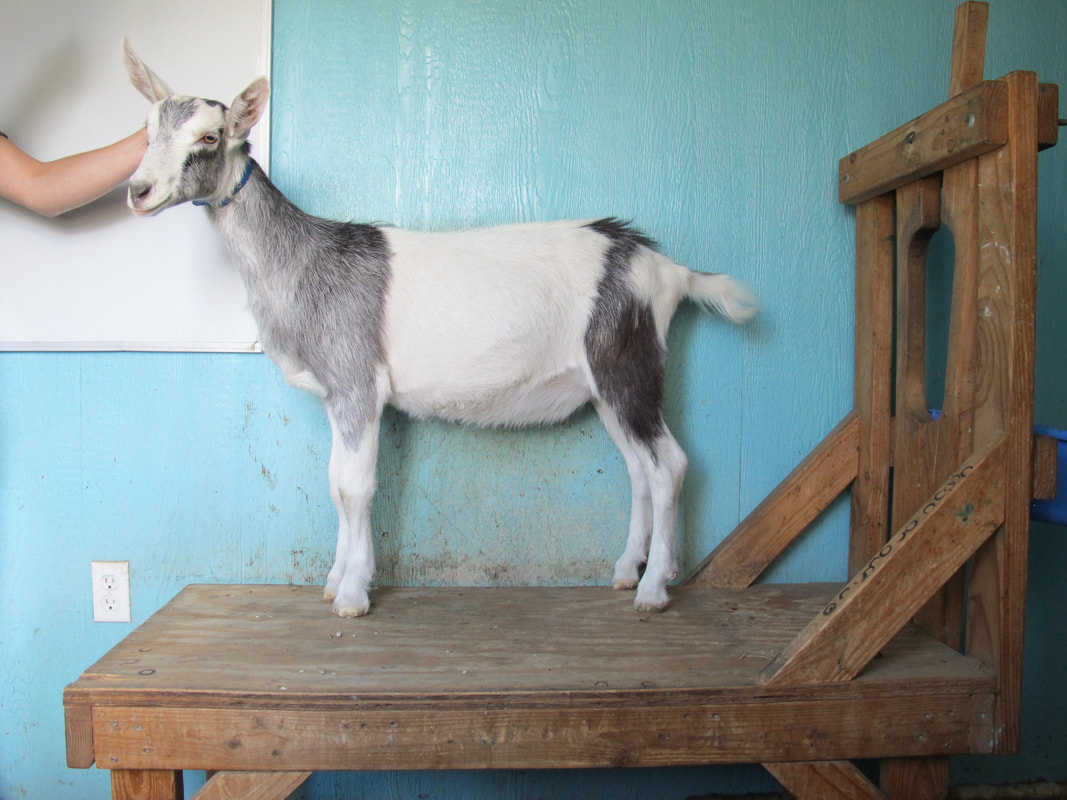
This kid is quite a unique color. Technically she is simply "broken Sundgau" but obviously there is a little more going on. I call her a "belted blue sundgau."
|
Markings
Broken (any solid color or pattern with extra spots of white.)
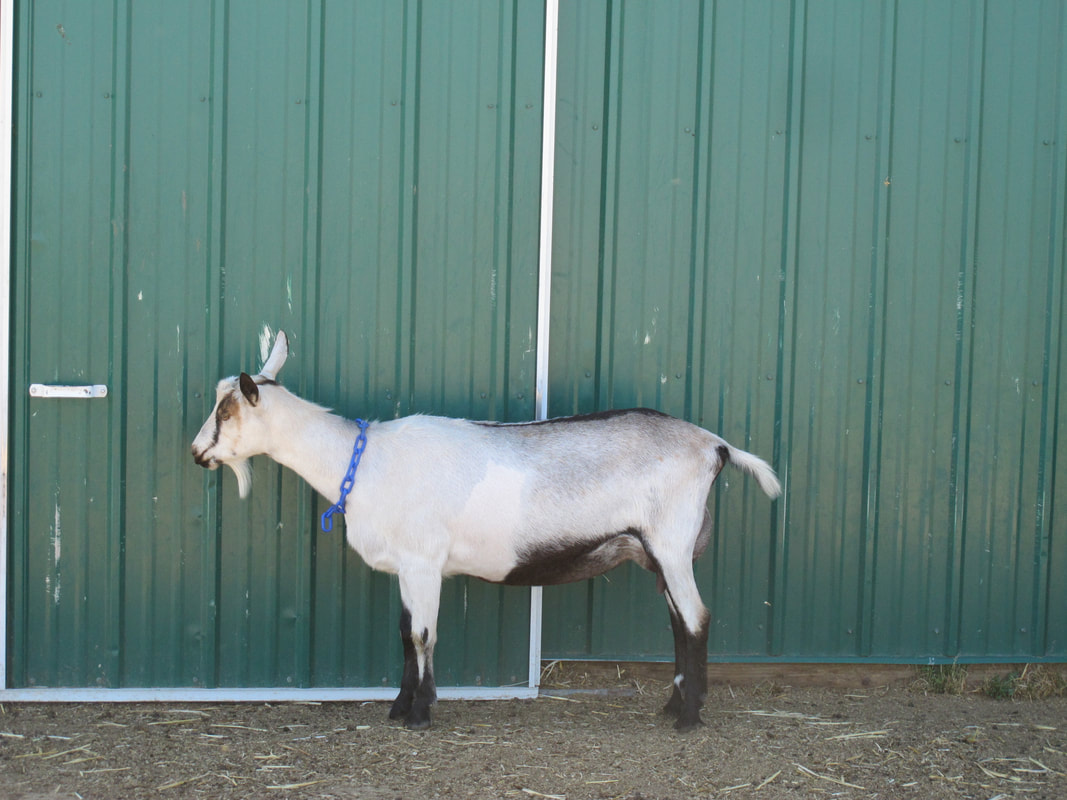
Broken two-tone chamoisee
|
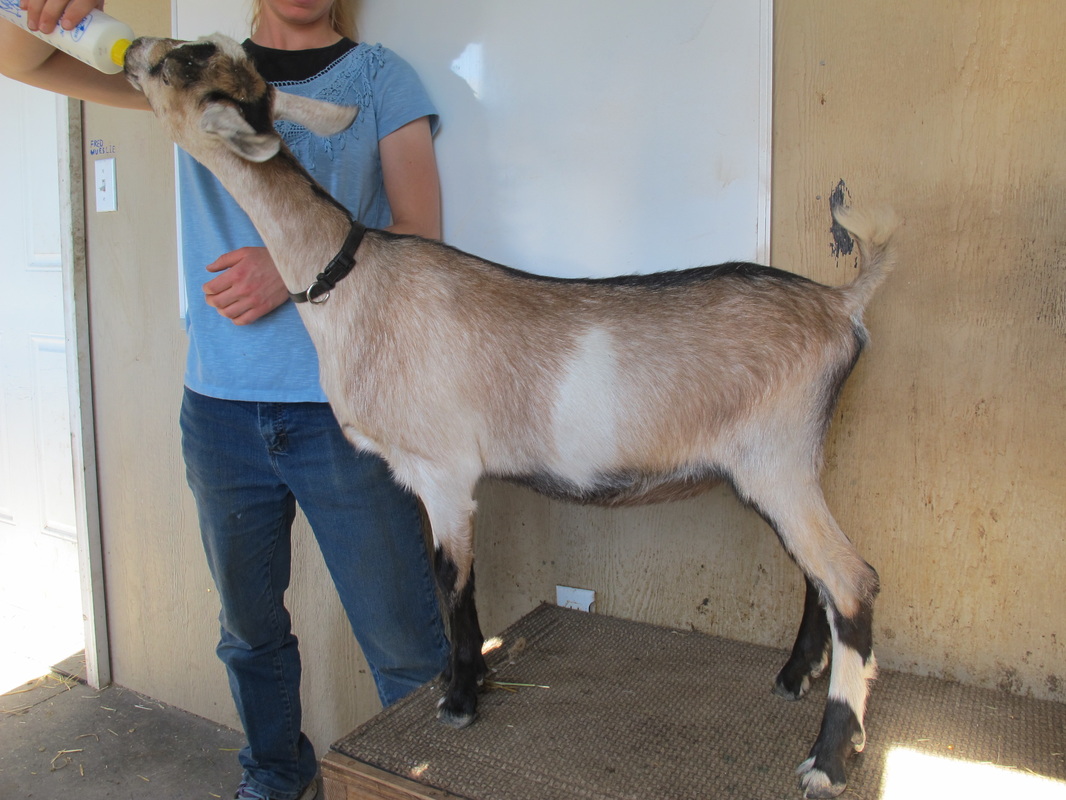
Broken chamoisee
|
Belted (when the white goes all the way around the goat. Some people just call it broken)
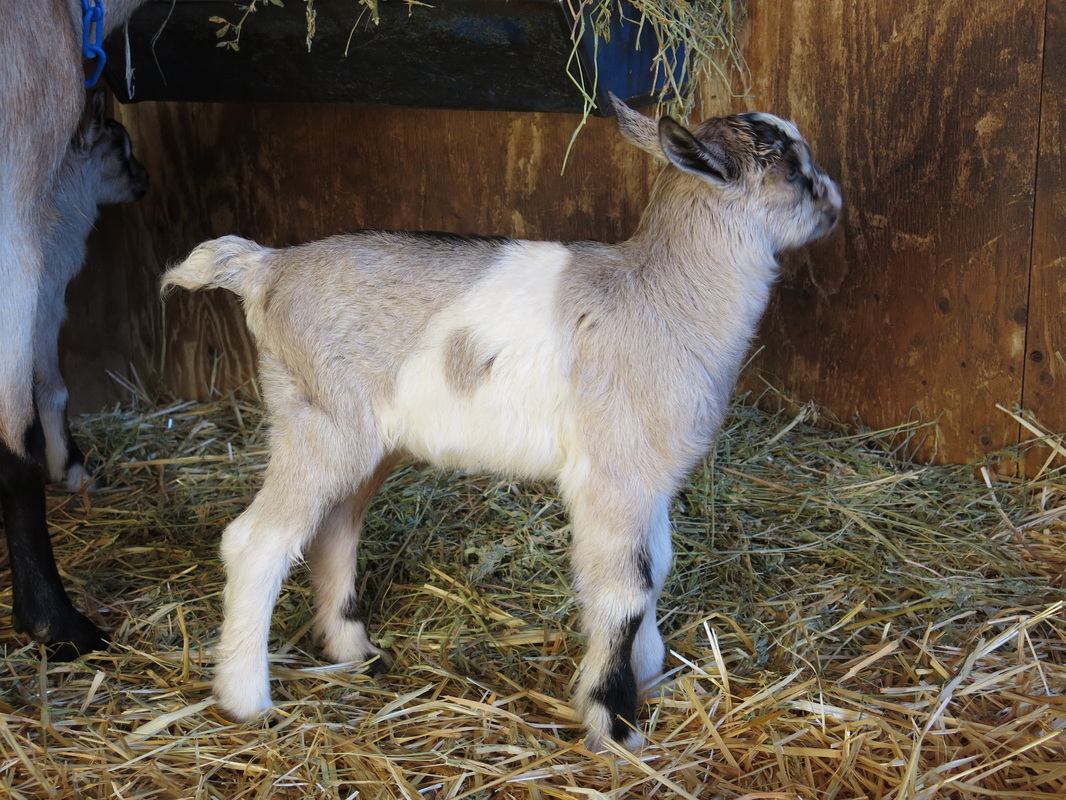
Belted chamoise
|
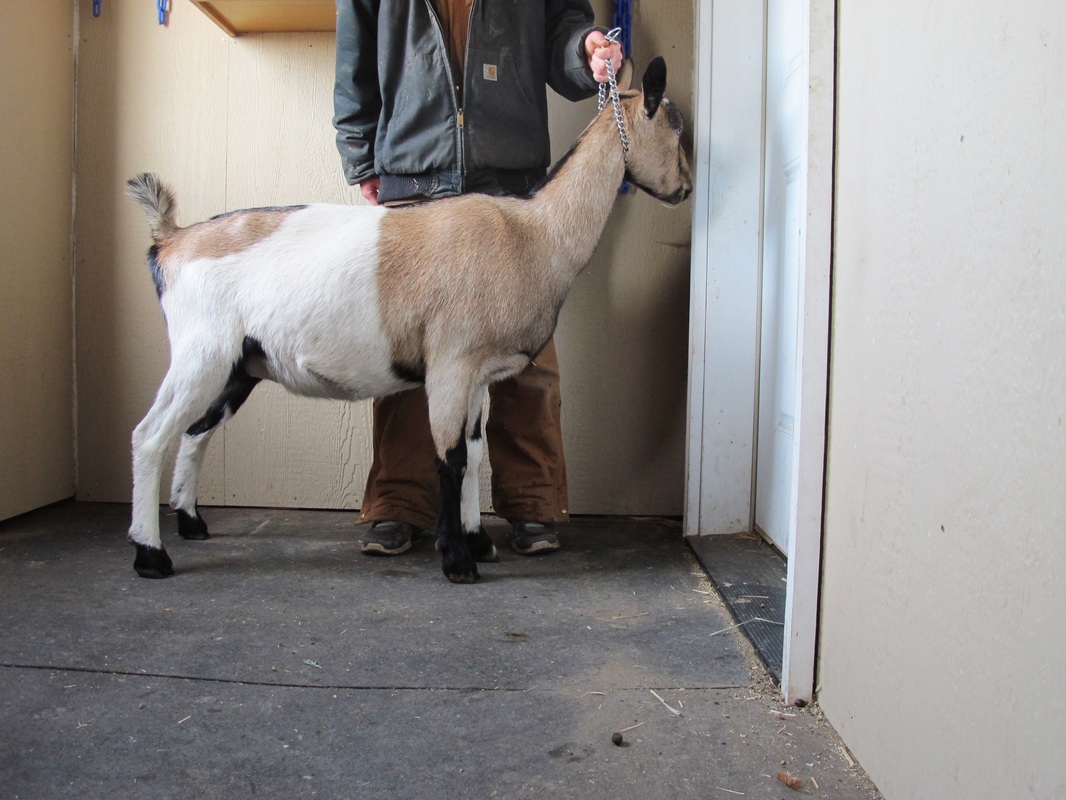
Belted chamoisee
|
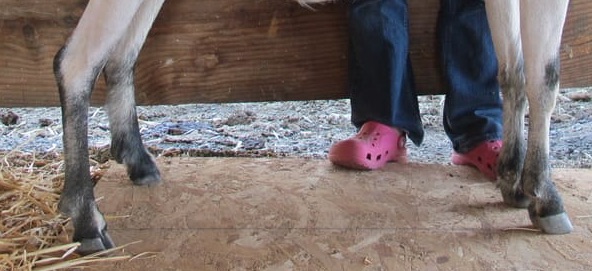
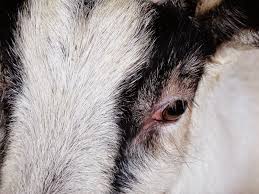
Roaning
|
|
This doe has roaning on her legs and face.
Trim
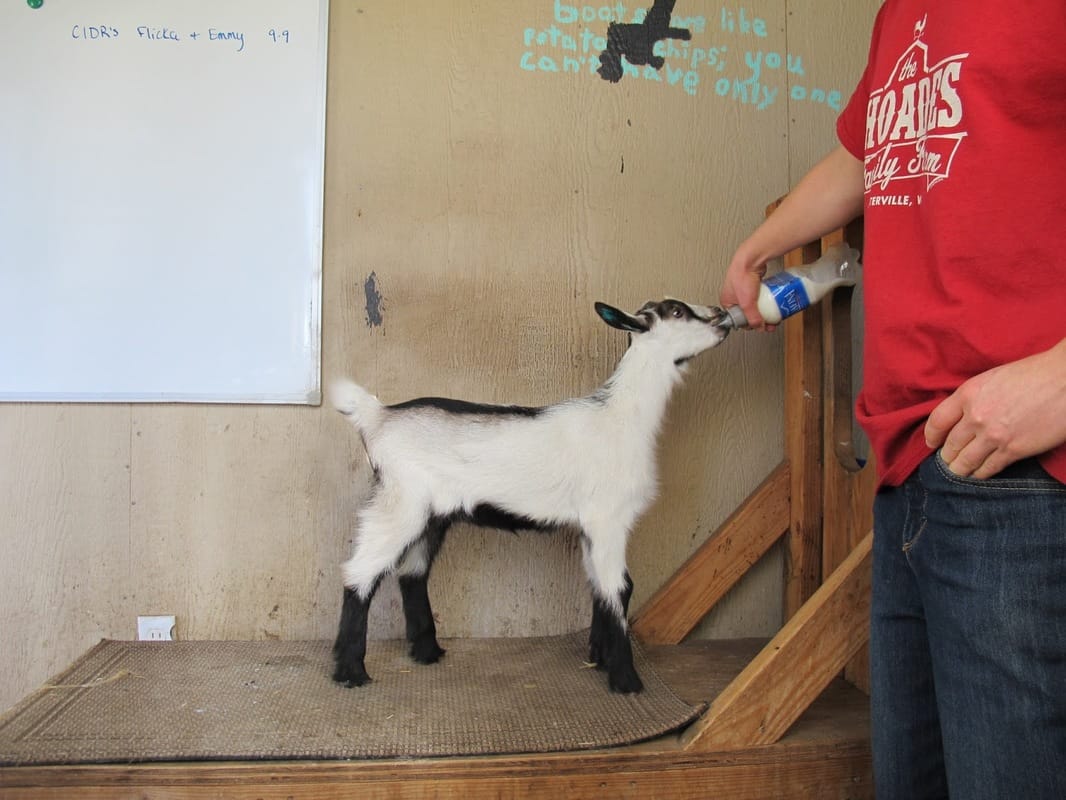
Black trim
|
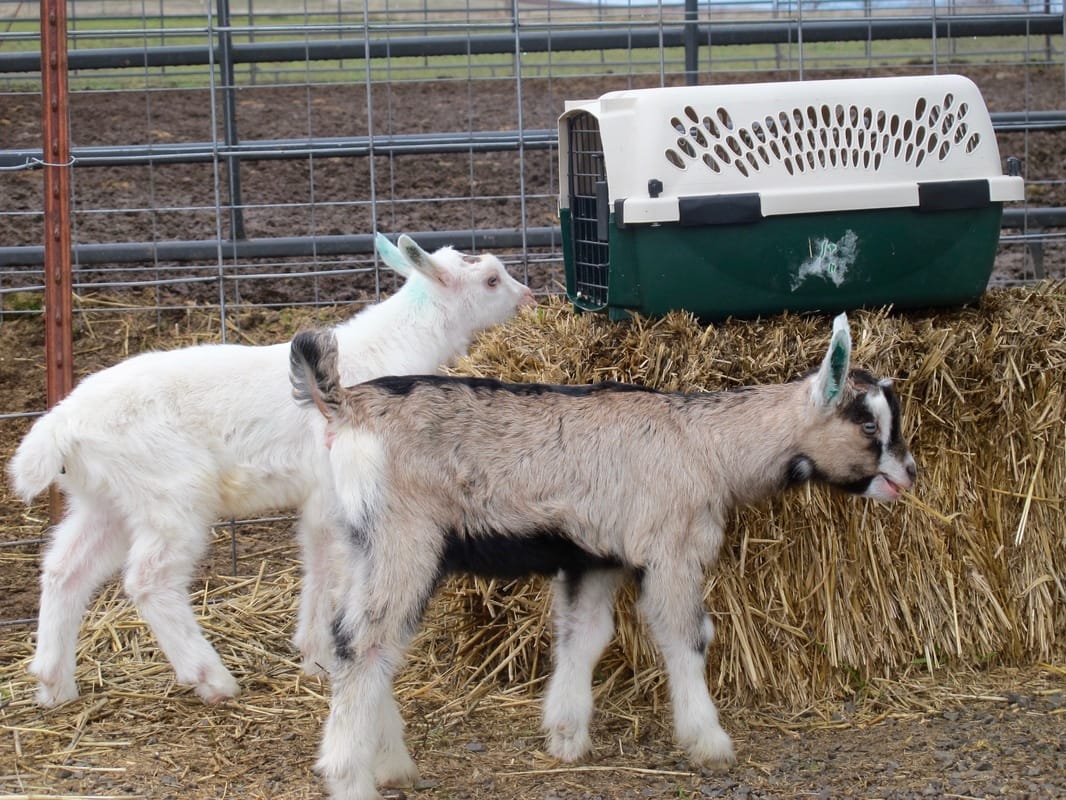
White trim
|
Typically, Alpines have either black trim or white trim. Trim is usually considered to be the color on the legs, facial stripes, and under the tail.
Describing color for registeration
Some people are very basic when describing color, and others are very in depth. I usually like to mention markings that make a goat identifiable, but either way is acceptable. Here are a few examples.
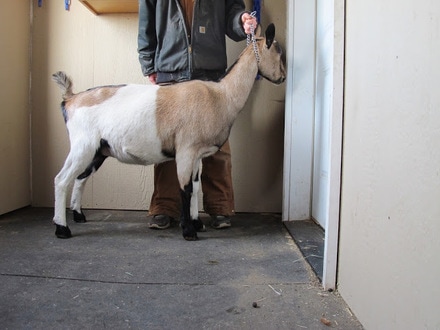
Most people would call this doe "broken chamoisee." Others would say, "belted chamoisee, w/white splashed legs and white on poll."
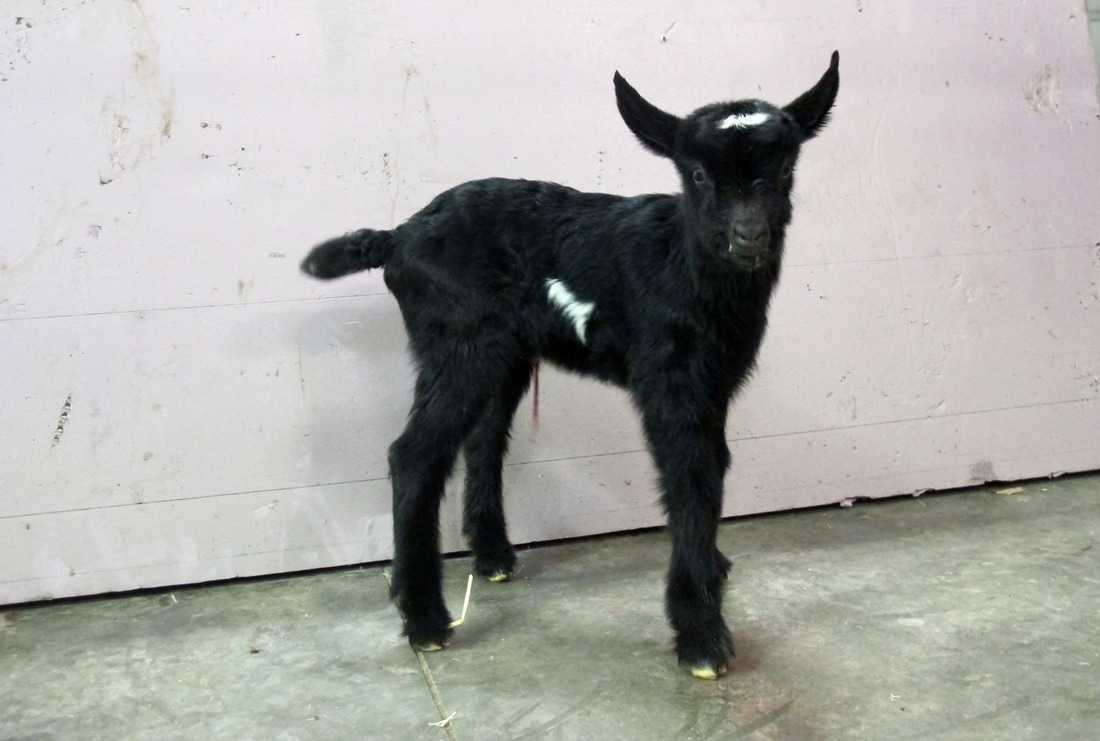
I registered this goat as: broken black w/white on poll, right side, belly, and chin.
|
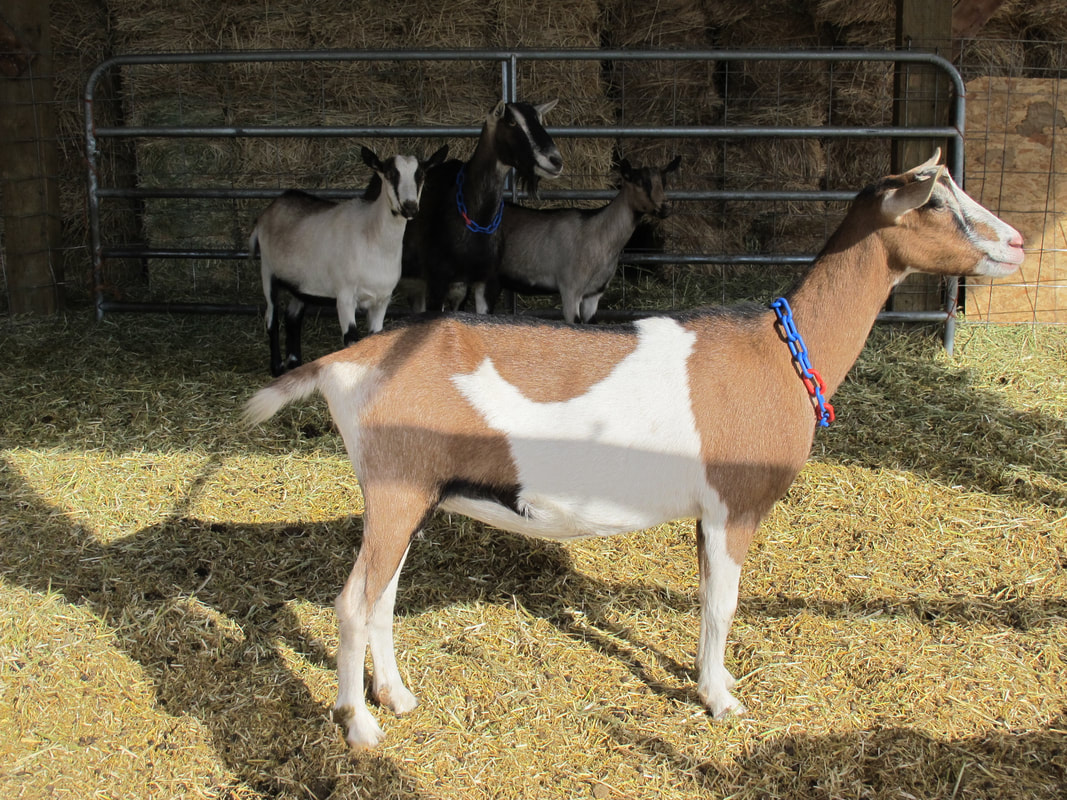
Again, most people would call this doe "broken chamoisee" and maybe adding "w/white trim." Others would say, "belted chamoisee w/white trim, underside, and face."
|
Color changing with age and clipping.
Because age and clipping or shedding of the coat can cause a goat to be a different color than they originally appeared to be, it is advisable to not register you kids right off the bat, but to wait a few months and see what their true color/markings are.
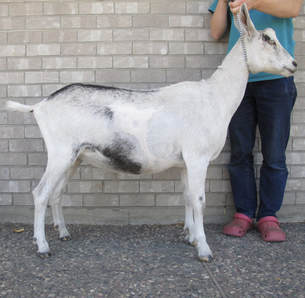
There was some discussion and argument over whether or not this doe was a broken cou blanc. The picture on the left is unclipped where she slightly appears to be broken, but in the clipped picture on the left, she is clearly broken.
There was some discussion and argument over whether or not this doe was a broken cou blanc. The picture on the left is unclipped where she slightly appears to be broken, but in the clipped picture on the left, she is clearly broken.
|
|
At birth, this doe appeared to be a simple two-tone chamoisee. As she grew, it became evident that something more was going on. When the white patch on her side showed up, it made sense, and I wondered why I hadn't noticed the band around right rear leg, and white extending down the front left leg, which indicated broken in the first place, without waiting until the patch on her side appeared. Also notice how the two tone becomes very evident the older they get, though in a kid, often the only indicator of two-tone is a little bit of dark on either side of the dorsal stripe.
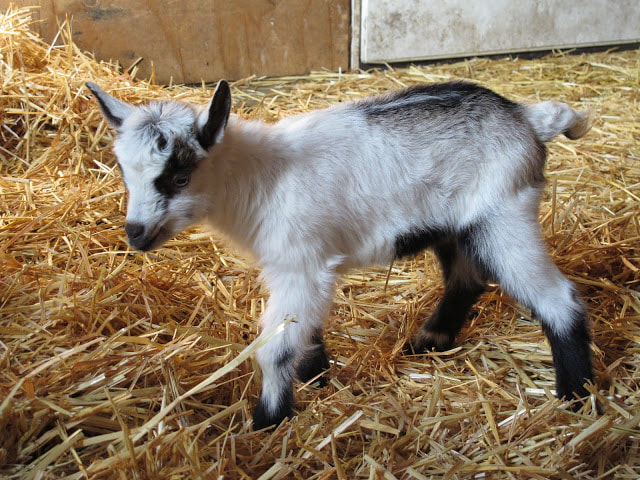
Newborn
|
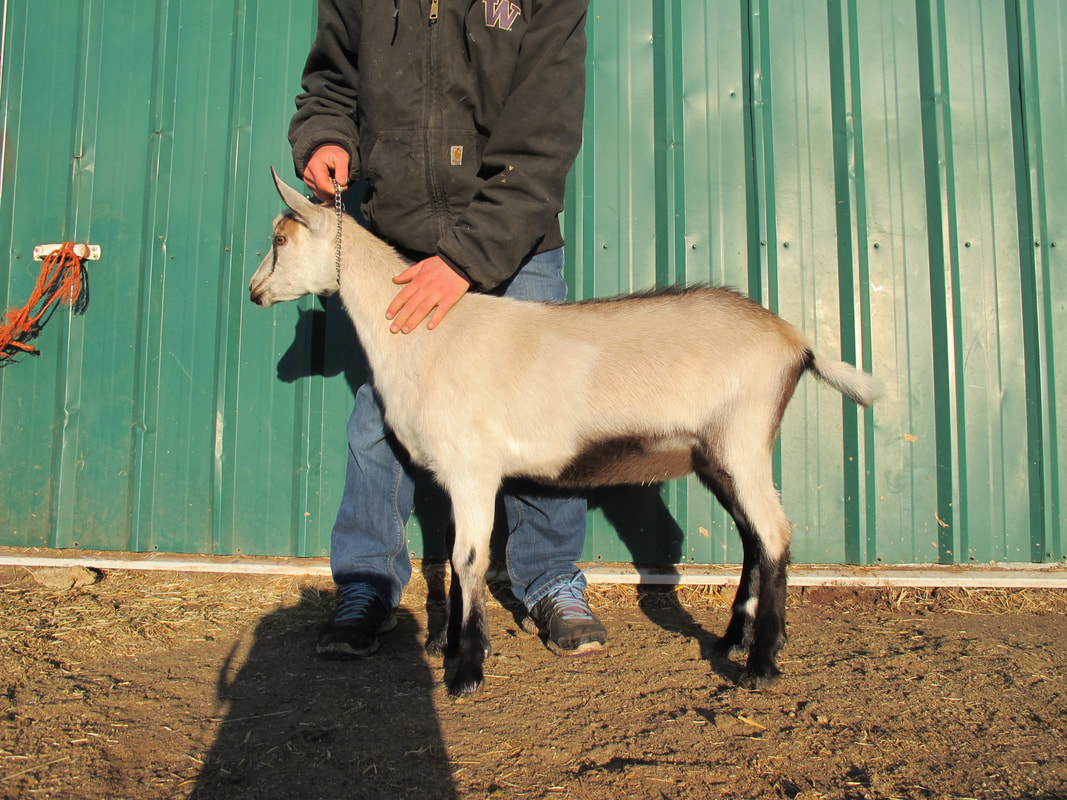
Three months
|
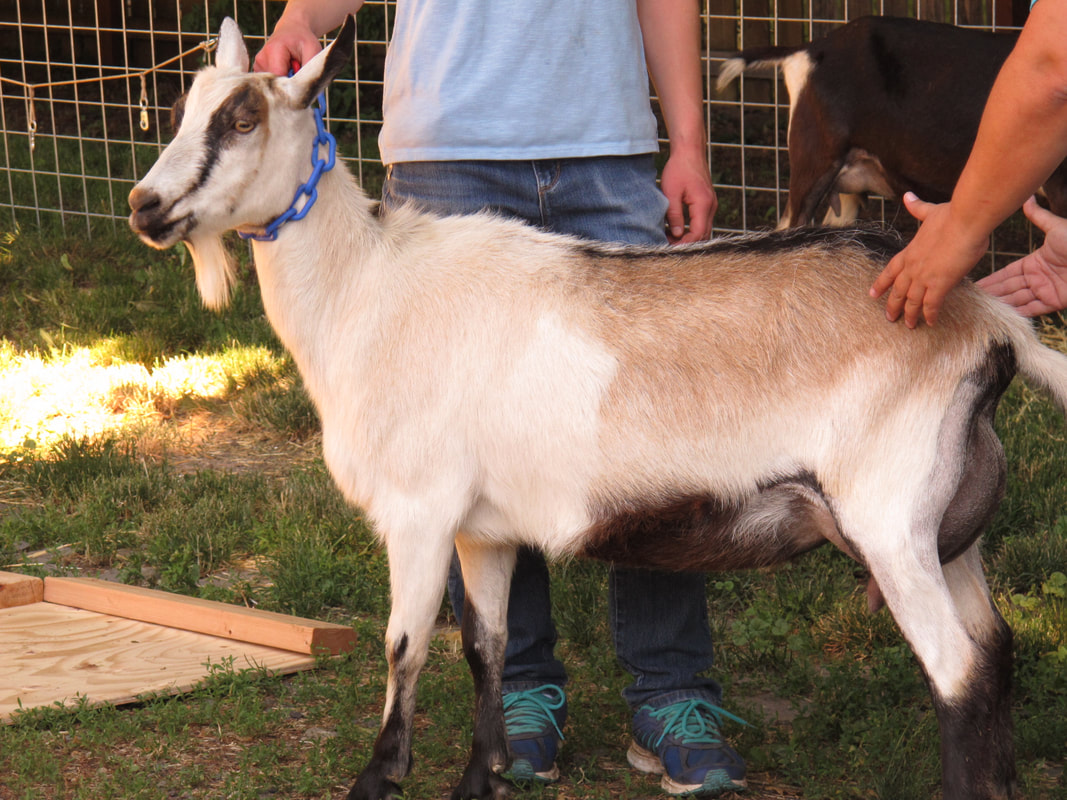
15 months
|
